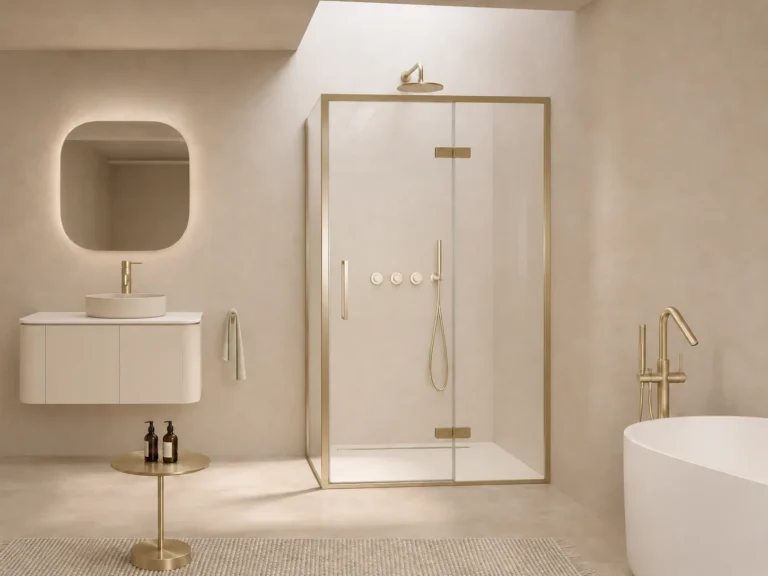
Zenova works with a specialist PVD coating partner to develop colors, define surface textures and manage coating quality for stainless steel shower enclosure hardware. From physical finish samples and coordinated components to cleaning, coating and inspection, we develop finish specifications around each project's appearance and application requirements.
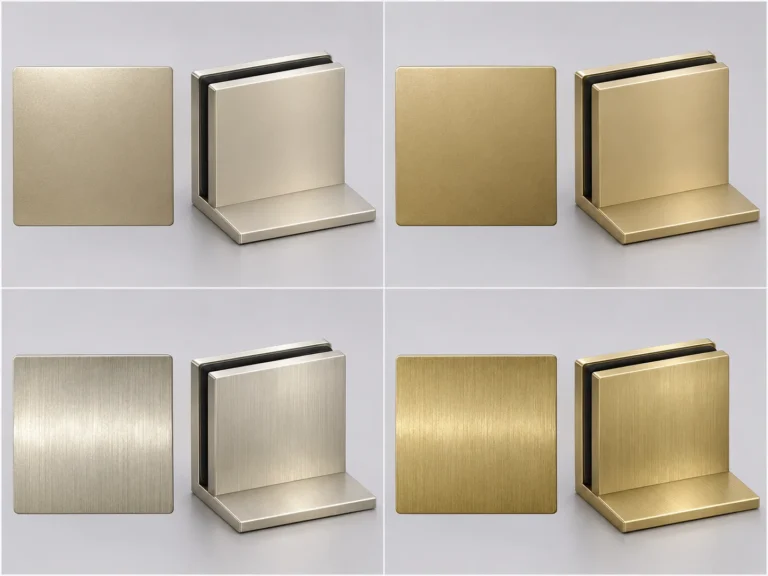
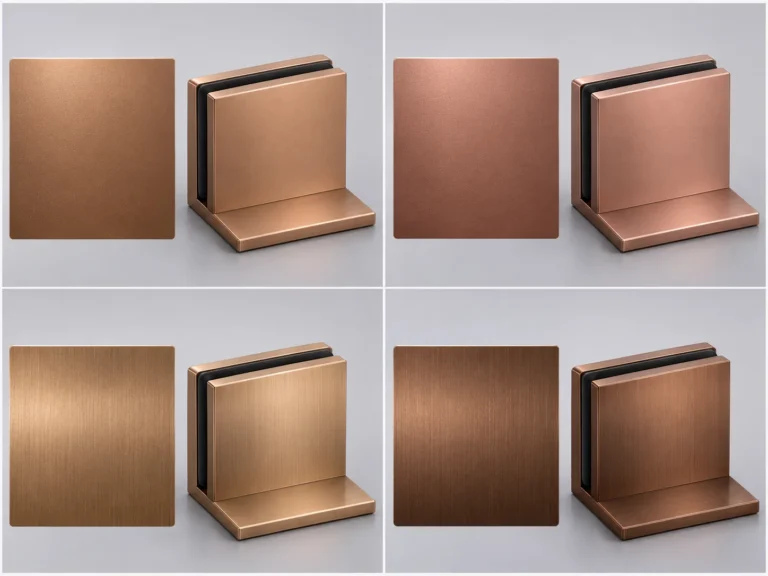
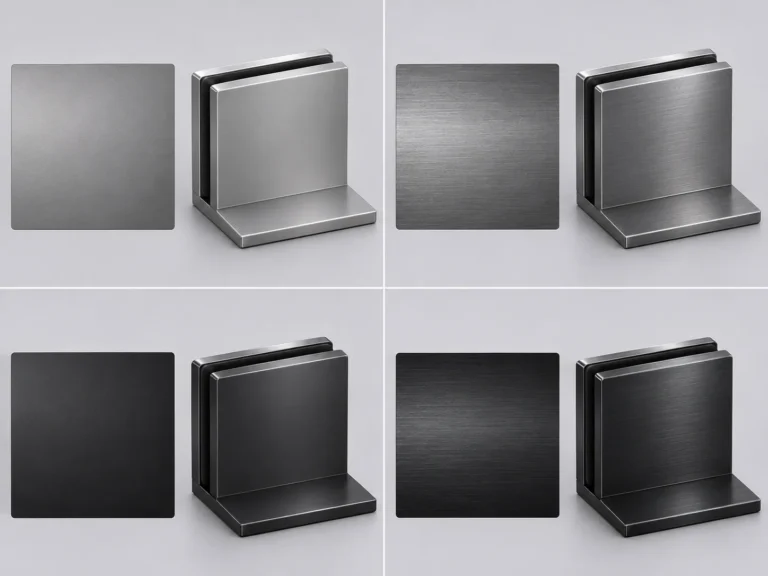
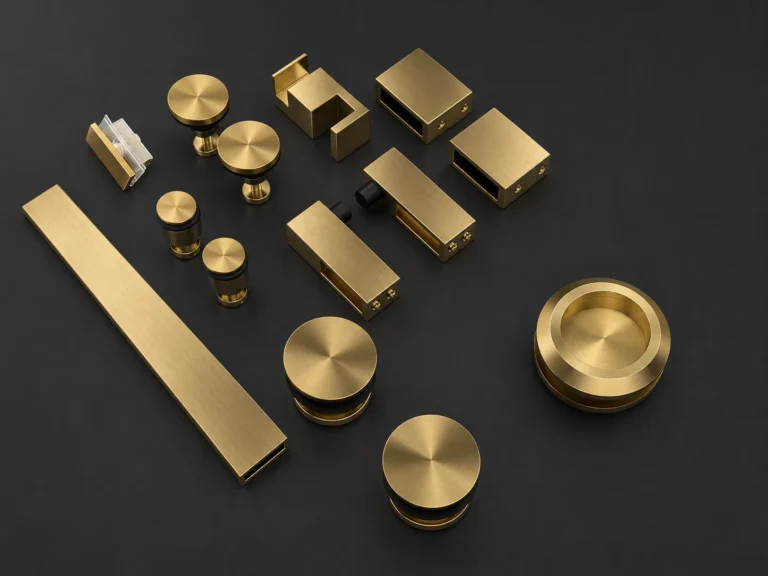
We produce champagne, gold, copper, bronze, gray and deep black PVD finishes in brushed or satin textures. Physical finish samples and matching hardware components are reviewed together for coordinated color, sheen and texture, and approved reference samples are retained under controlled storage as the benchmark for production and repeat orders.
Deep black here is a PVD finish, made to order. The Matte Black in our standard hardware colors is powder coated; see the color options on our Customization page.
Champagne and Gold
Copper and Bronze
Gray and Deep Black
From Physical Samples to Coordinated Hardware
Images illustrate color and texture options. Final finishes are subject to approval of physical samples.
Coating Quality Begins with the Substrate
Before coating, stainless steel hardware is inspected for surface and machining conditions, including scratches, pits, corrosion, burrs and polishing residue. Polishing, brushing and cleaning are completed according to the approved finish specification to prepare the surface for coating.
The stainless steel grade and coating system are selected according to the component design, service environment and customer requirements.
Pre-coating surface inspection at our coating partner
Removing Contaminants Before Coating
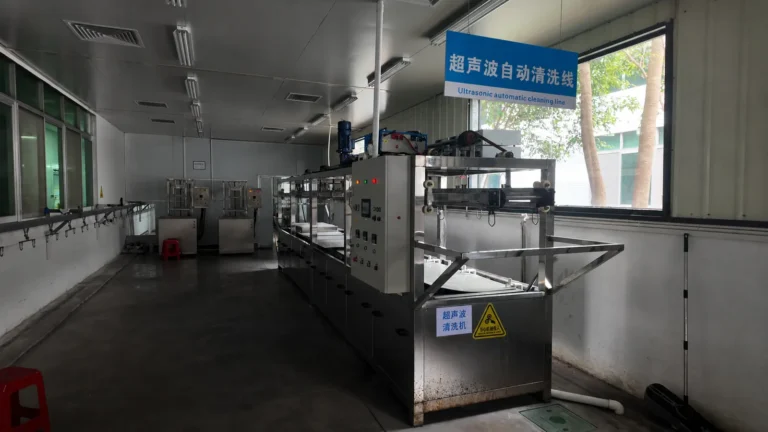
Hardware components undergo ultrasonic cleaning to remove polishing wax, machining oils and other surface contaminants. Appropriate cleaning, rinsing and drying steps help minimize residues before coating, and components are checked for fingerprints, water marks and cleaning residues before loading into the coating chamber.
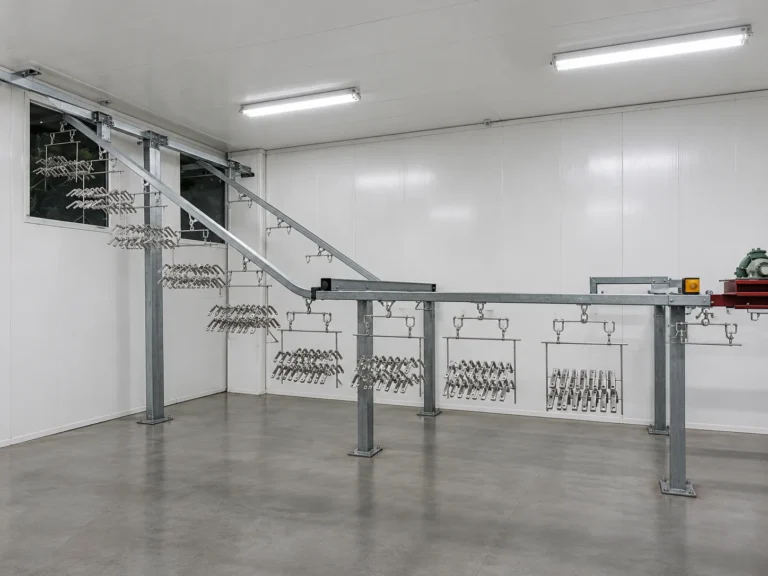
After cleaning, components move along an automated conveyor, minimizing direct handling to reduce recontamination and the risk of impact damage.
Ultrasonic cleaning lineAutomated transfer after cleaning
PVD Coating with Digital Process Control
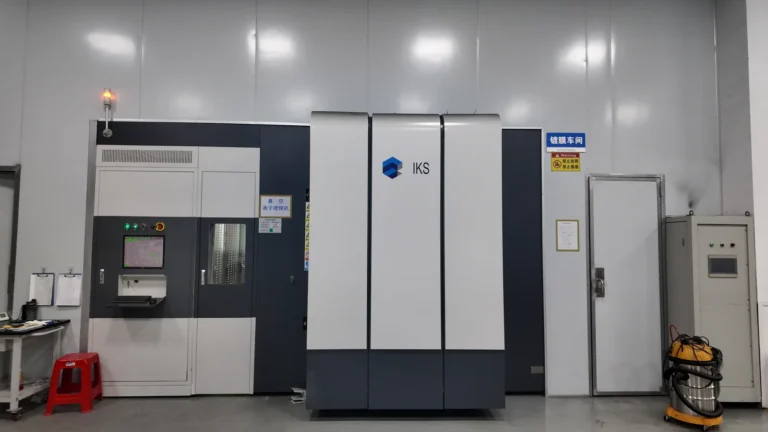
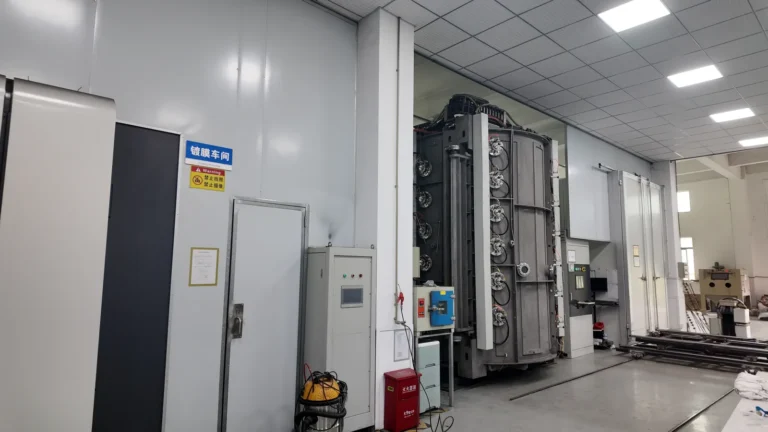
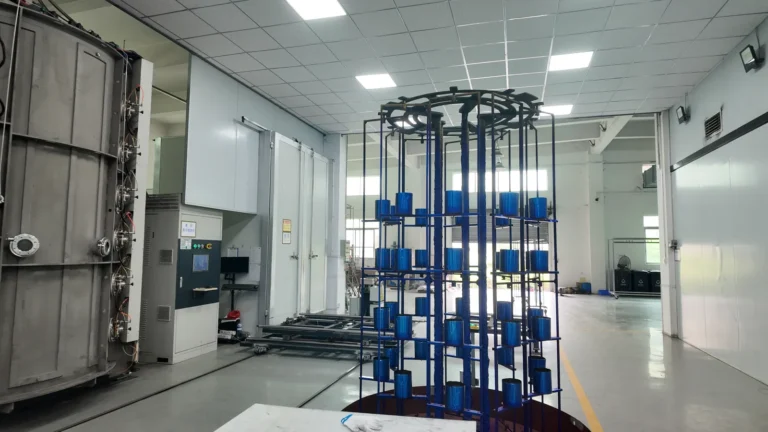
Our coating partner uses medium-frequency PVD coating equipment with computerized digital controls linked to its ERP production management system, supporting process parameter management, production scheduling and progress tracking. Production is organized around the approved substrate, color and coating system, with samples and inspection results used to support process improvement.
PVD coating equipment and controlsCoating workshopPart rack and coating chamber
Checking Production Finishes Against Approved Samples
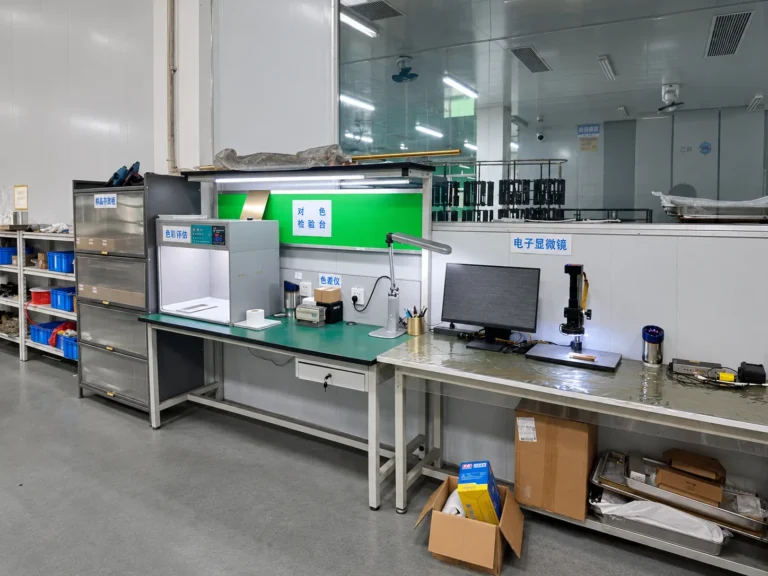
After coating, finished components are visually compared with approved samples in a color matching light booth, with instrumental measurements used to assess color differences. Matching hardware is also reviewed for sheen, texture direction and overall visual consistency. Approved reference samples are stored in dedicated cabinets to provide a consistent reference for batch inspections and repeat orders.
Color matching and inspection area
Tested in Our Coating Partner's Lab
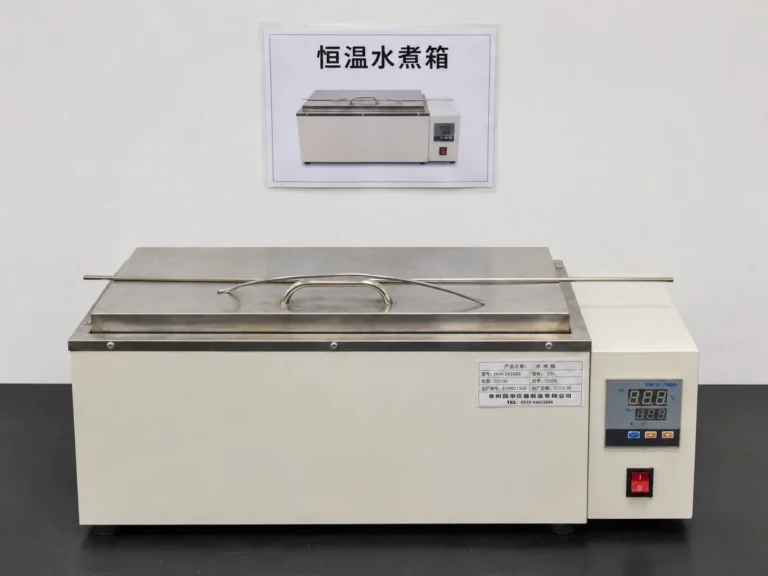
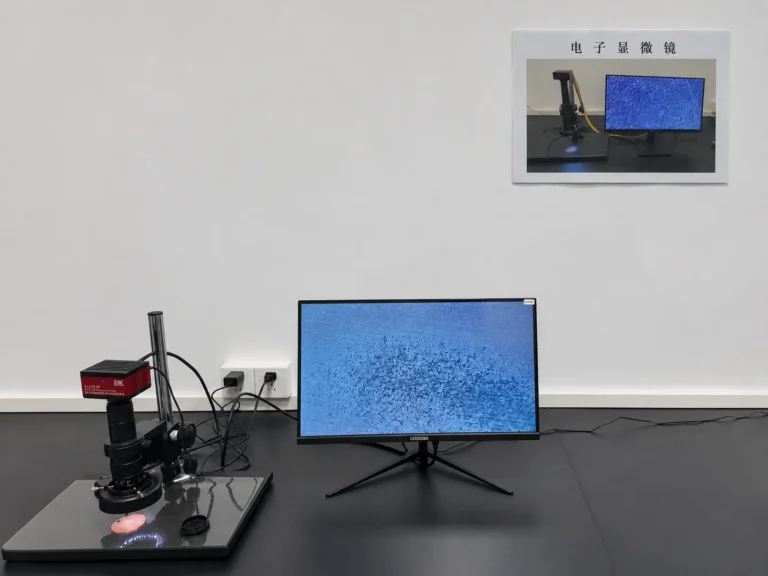
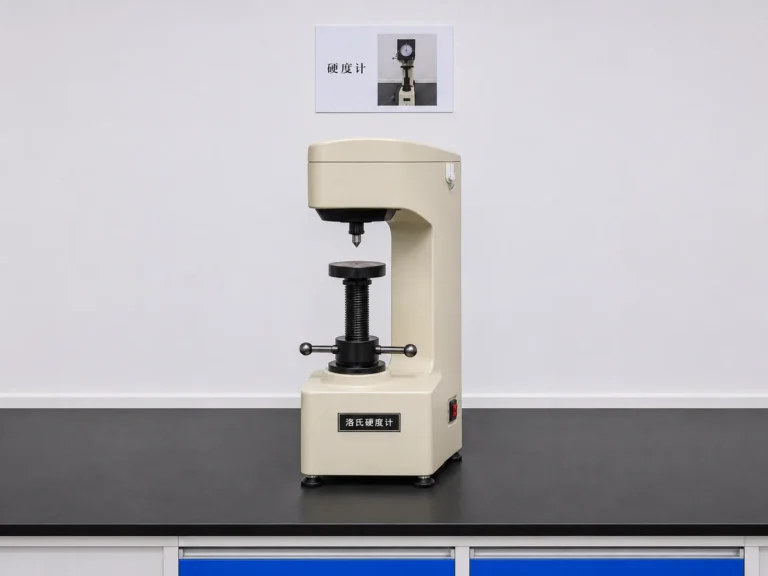
Zenova sets the technical specification; with our coating partner we define the applicable tests, methods and acceptance criteria. The partner's lab supports coating thickness analysis, linear abrasion, rub testing, controlled-temperature water immersion, microscopic surface inspection and hardness testing of suitable metallic substrates. Tests requiring specialized equipment or independent verification can be arranged according to project requirements, and results are documented together with specimen details, test methods and conditions.
Coating Thickness
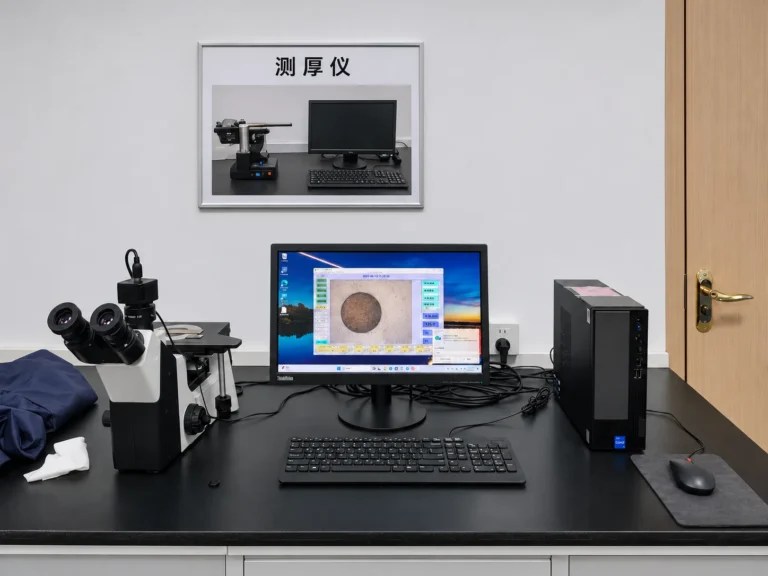
Ball-cratering and microscopic analysis are used to measure coating thickness on suitable specimens. Measurement locations are selected according to component geometry and coating architecture, with results recorded against the agreed thickness specification.
Zenova internal target: at least 0.8 μm total coating thickness for general components, and at least 1.0 μm for critical components and specified dark coating systems, confirmed for each project in sample approval and the agreed quality specification.
Linear Abrasion
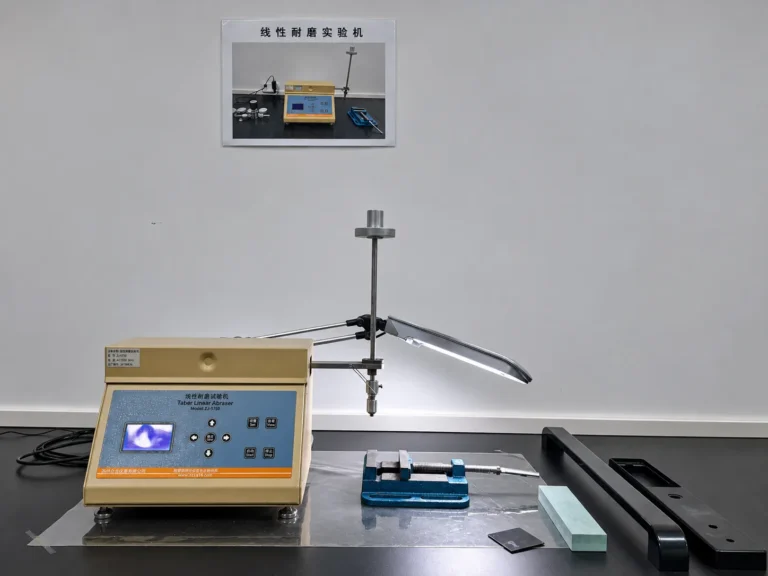
A linear abrasion tester applies reciprocating motion under defined loads, media, stroke lengths, speeds and cycle counts. Specimens are examined for wear marks, changes in sheen, substrate exposure and coating detachment. Where an ISO 23100 abrasion method or another specified method is required, the fixture, abrasive medium and operating conditions are verified before testing and reporting.
Alcohol and Eraser Rub
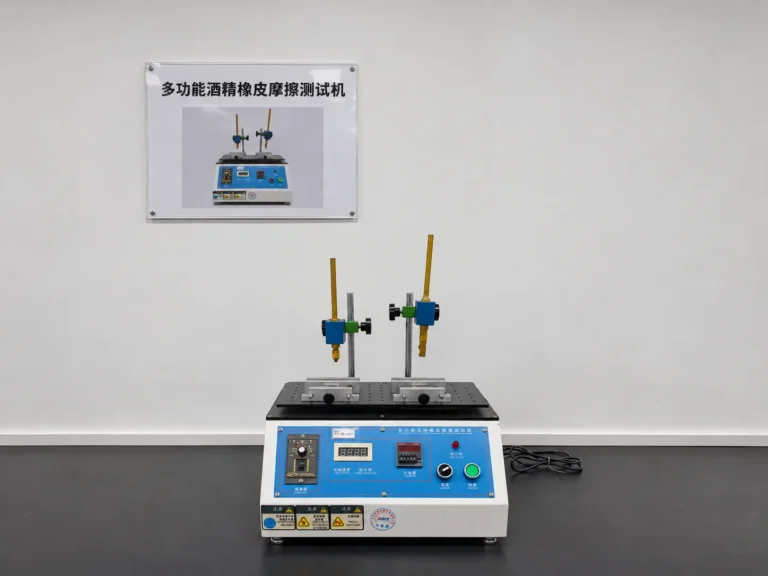
Alcohol and eraser rub tests provide supplementary evaluation of resistance to wiping and rubbing under agreed conditions.
Warm Water Immersion
Suitable specimens are fully immersed in the specified test water at 60 ± 1 °C for 24 hours, Zenova's internal water-resistance target. Appearance, color change and adhesion are then assessed using the agreed procedures, with inspection focused on blistering, peeling, corrosion and significant loss of sheen.
Microscopic Surface Inspection
A digital microscope provides magnified surface views to help identify fine scratches, particles, localized defects and changes after testing, with images retained where required.
Substrate Hardness
A Rockwell hardness tester is used for suitable metallic substrates. The hardness of the PVD film itself requires a dedicated method appropriate to the coating thickness and substrate conditions.
Adhesion and Corrosion, Planned per Project
Adhesion, thermal shock and salt spray test plans are selected according to the application, coating system and customer requirements. Tests requiring specialized equipment are arranged through our coating partner or an external laboratory, with supporting records or reports provided as agreed. Zenova internal target for visible exposed surfaces: 24 hours of acetic acid salt spray with an appearance rating of at least 9, subject to the agreed test method, assessment area and acceptance criteria.
Batch Records and Protective Packaging
Product details, color, coating architecture, batch identification and inspection results are recorded according to the agreed inspection plan. New products and process changes are reviewed through sample approval and applicable verification tests.
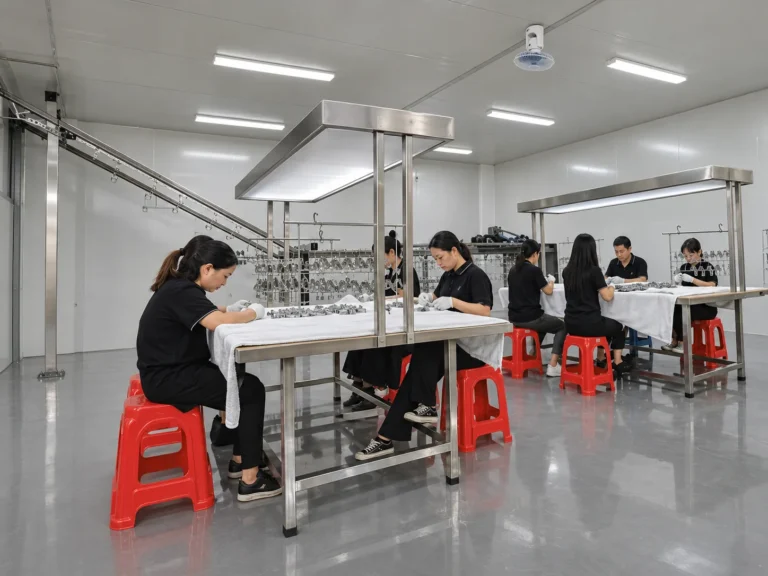
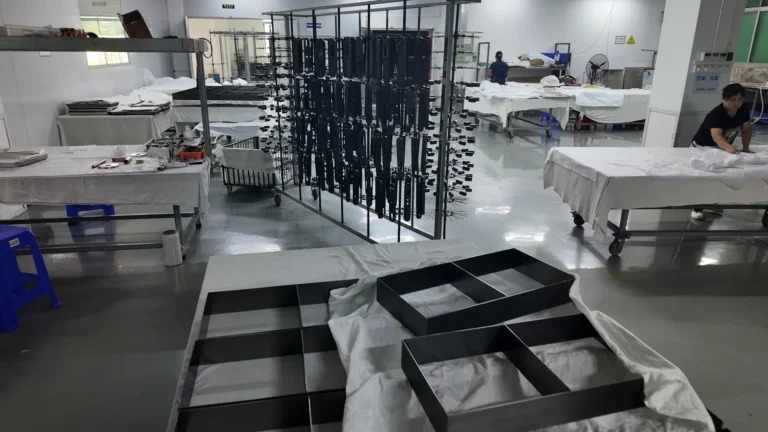
Accepted components are separated during packaging to reduce rubbing and impact damage and protect the finished surfaces.
Post-coating inspection and divided packing
Define Coordinated Finishes for Your Shower Enclosure Project
Share your target color, matching hardware, substrate and application requirements. Zenova coordinates sample development with our specialist coating partner and defines appearance, testing and acceptance criteria before mass production.
PVD finish sample plates are free of charge. Charges for complete shower door samples are set out on our Ordering & Delivery page.